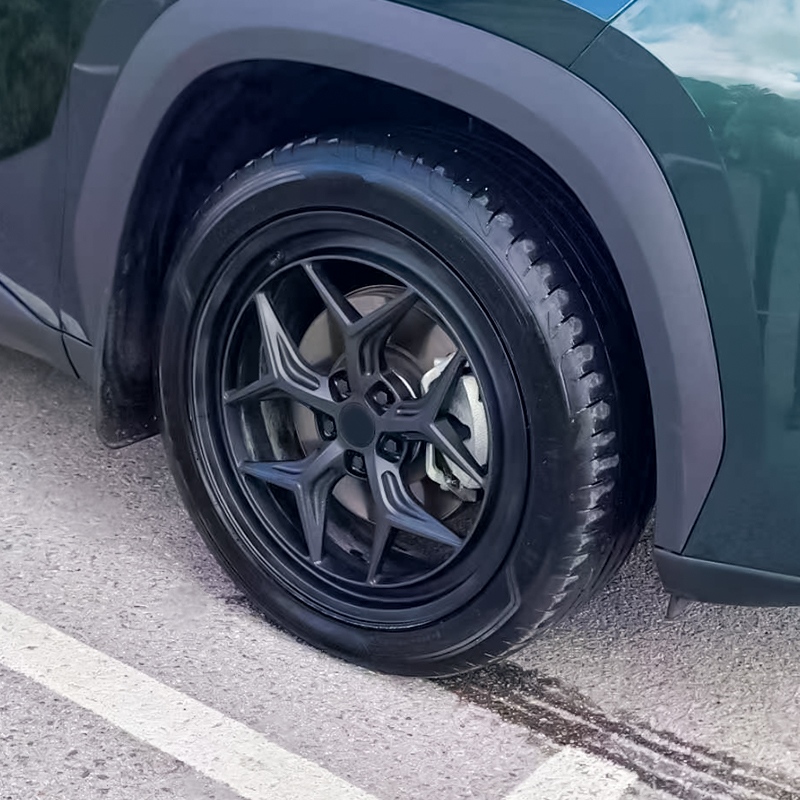
How Do Lightweight Forged Wheels Affect Handling and Brake Fitment?
Jul 10, 2026
Wheel weight and fitment can influence how quickly a vehicle responds to steering, braking, and changes in the road surface. This is why lightweight forged wheels are often considered for performance cars, custom builds, and vehicles equipped with larger brakes. The main advantages come from lower weight, high strength, and more flexible fitment options. However, the actual improvement depends on the wheel design, tire selection, vehicle setup, and whether the specifications are correctly matched.
1. Lower Weight and Faster Response
One of the biggest advantages of forged wheels is their strength-to-weight ratio. During forging, aluminum is compressed under high pressure to create a dense and strong material structure. This allows manufacturers to reduce unnecessary material while maintaining the required strength and load capacity. A lighter wheel reduces both rotational mass and unsprung mass. The engine needs less energy to rotate the wheels, which may make acceleration feel more responsive. Lower unsprung weight also allows the suspension to react more quickly to bumps and changes in the road surface. Depending on the vehicle and wheel specifications, lightweight aftermarket forged wheels may provide:
* Sharper steering response
* More responsive acceleration
* Better suspension movement
* Improved road contact
* More controlled braking feel
The difference will vary according to wheel size, tire weight, spoke design, and the weight of the original wheels.
2.More Precise Handling
Wheel weight also affects how quickly a vehicle changes direction. Lighter front wheels can make steering feel more direct, especially on sports cars, performance sedans, and front-wheel-drive vehicles. A properly engineered forged wheel also provides good structural rigidity under cornering loads. This helps the wheel maintain its shape and supports more consistent tire contact with the road. Forged wheels alone will not eliminate understeer or correct an unsuitable suspension setup. Tire compound, alignment, suspension geometry, and driving conditions remain important. However, reducing unnecessary wheel weight can help the suspension and tires work more effectively.
3.Staggered Forged Wheels and Rear Traction
A staggered setup uses wider wheels and tires on the rear axle than on the front. It is commonly used on rear-wheel-drive sports cars and other high-performance vehicles. Wider rear tires can improve traction during acceleration and provide greater rear-end stability. Custom forged wheels are suitable for staggered applications because the front and rear widths, offsets, concavity, and brake clearance can be designed according to the vehicle. However, staggered wheels are not suitable for every car. Some all-wheel-drive vehicles require the front and rear tire rolling diameters to remain within a very small tolerance. Staggered setups may also prevent normal front-to-rear tire rotation. Before ordering, it is important to confirm the wheel width, offset, tire size, rolling diameter, suspension clearance, and vehicle load requirements.
4.Better Brake Clearance
Many performance vehicles use large brake calipers and rotors. In these applications, wheel diameter alone does not determine whether the brakes will fit.Spoke shape, hub thickness, mounting pad position, and barrel design all affect caliper clearance. Two wheels with the same diameter and width may have completely different brake fitment. Custom aftermarket forged wheels can be designed around the brake system. A 3D drawing can be prepared before production to confirm:
* PCD and center bore
* Wheel offset and width
* Spoke-to-caliper clearance
* Hub position
* Concavity
* Suspension and fender clearance
This makes forged wheels a practical option for vehicles with factory performance brakes or aftermarket big brake kits.
5.Strength for Demanding Driving
Aggressive road driving and track use place repeated stress on wheels through hard cornering, heavy braking, impacts, and heat cycles. Forged aluminum has a dense internal structure and a strong grain flow, allowing the wheel to achieve high strength without excessive material thickness. This is why forged wheels are widely used on sports cars, luxury vehicles, SUVs, and motorsport builds. However, not every forged wheel offers the same level of performance. Final quality also depends on the aluminum material, heat treatment, structural design, CNC machining, load calculations, and quality inspection. The lightest wheel is not always the best choice. A good forged wheel should balance weight reduction, strength, load capacity, and long-term durability.
6.Correct Fitment Matters
Forged construction cannot compensate for incorrect specifications. Before purchasing aftermarket forged wheels, always confirm:
* Wheel diameter and width
* Bolt pattern or PCD
* Center bore
* Offset
* Brake clearance
* Suspension clearance
* Tire size
* Vehicle load rating
Incorrect offset can cause interference with the suspension, brakes, or fenders. It may also affect steering geometry and wheel-bearing load. Load rating is particularly important for SUVs, crossovers, and electric vehicles because of their higher vehicle weight.
Finding the Right Balance
A good forged wheel should not be selected by weight alone. Wheel strength, load capacity, brake clearance, offset, tire size, and intended use all need to be considered together. When these specifications are correctly matched, lightweight forged wheels can provide a useful balance of handling response, strength, and custom fitment.