Why Do Car Wheels Often Have 5 Spokes?
May 27, 2024
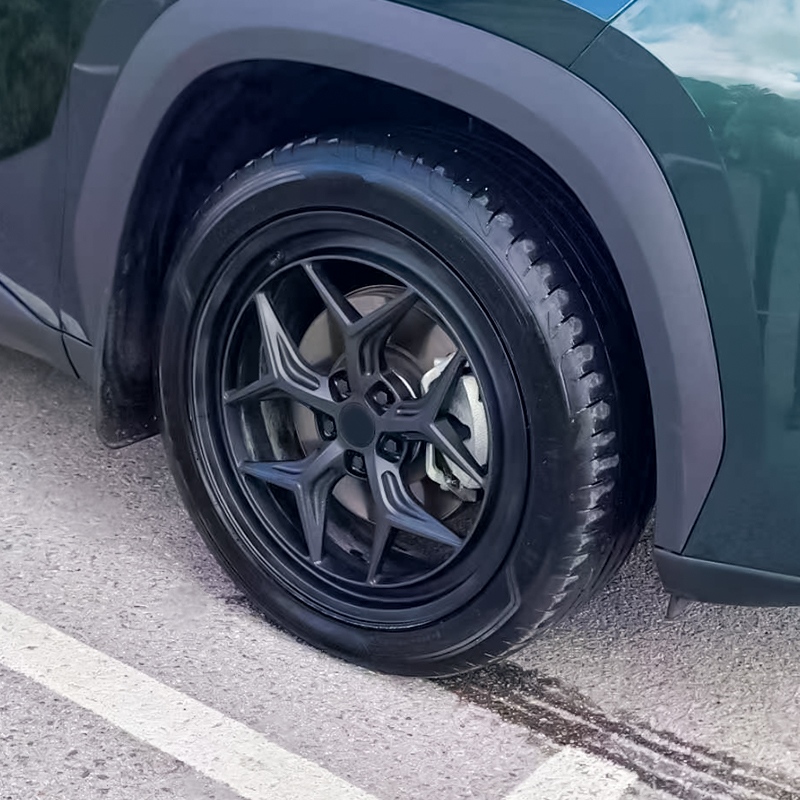
Why do car wheels have 5 spokes? Five-spoke wheels are one of the most common wheel designs used on OEM, aftermarket and custom wheels.
However, there is no rule that a car wheel must have exactly five spokes. The popularity of **5 spoke wheels** comes mainly from the balance they can offer between structural design, weight, brake clearance, open space and appearance.
What Do the Spokes of a Wheel Do?
Wheel spokes connect the center section of the wheel to the outer rim. They help transfer forces through the wheel while maintaining the required strength and stiffness. But spoke count alone does not determine how strong a wheel is.
Wheel performance also depends on:
- Wheel material
- Manufacturing process
- Spoke shape and thickness
- Hub and rim structure
- Wheel size and offset
- Vehicle weight and load requirements
Therefore, a properly engineered five-spoke wheel is not automatically stronger than a six-spoke or multi-spoke wheel.
Why Are 5 Spoke Wheels So Common?
1. A Simple and Efficient Structural Layout
A traditional **five spoke wheel** uses five main spokes to connect the hub area with the outer rim. This layout allows each spoke to have enough width and material while still leaving relatively large openings between the spokes. For forged wheels, the spoke thickness, shape and material distribution can be further optimized according to the required wheel specifications and vehicle load.
2. More Open Space Around the Brake System
One of the most recognizable features of many **5 spoke wheels** is the open space between the spokes. Compared with a dense multi-spoke wheel, a traditional five-spoke design can expose more of the brake caliper and rotor behind the wheel. This is useful not only for appearance but also for wheel design. On vehicles with larger brake systems, the spoke position, thickness and curvature need to provide enough brake clearance. The open design may also allow airflow around the braking components, although actual brake cooling depends on the complete wheel design rather than simply having five spokes.
3. Flexibility in Weight and Material Distribution
A five-spoke structure also gives designers plenty of room to control how material is distributed across the wheel face. Fewer spokes do not automatically mean a lighter wheel, just as more spokes do not necessarily mean a heavier one. The final weight depends on the entire wheel structure. For forged wheels, CNC machining allows material to be removed from non-critical areas while maintaining the required strength and stiffness. The objective is therefore not simply to use fewer spokes, but to achieve an appropriate balance between **weight, strength and structural performance**.
What Is the Difference Between 5-Spoke, Split-Spoke and Multi-Spoke Wheels?
Not every wheel that looks like it has ten or more spokes is designed in the same way.
Classic 5-Spoke Wheels
A classic **5 spoke wheel** has five clearly defined main spokes extending from the center of the wheel toward the rim. This is the simplest version of the five-spoke layout and usually creates large open areas between each spoke. It is also one of the easiest wheel designs to recognize.
Split-Spoke and Y-Spoke Wheels
A five-spoke design can also evolve into a **split-spoke** or **Y-spoke** style. Instead of remaining as one solid spoke from the hub to the rim, the main spoke divides into two sections as it extends outward. A wheel may therefore appear to have ten spokes around the outer rim while still being organized into five main spoke groups. This design gives wheel designers more freedom to create a lighter or more detailed visual appearance.
Multi-Spoke Wheels
A **multi-spoke wheel** uses a larger number of narrower spokes distributed around the wheel. Compared with a traditional five-spoke design, multi-spoke wheels usually have smaller openings and a more detailed appearance. Neither style is automatically better. The choice depends on the intended appearance, wheel structure, vehicle requirements and engineering design.
Are 5 Spoke Wheels Stronger Than Multi-Spoke Wheels?
Not necessarily. It is easy to assume that five large spokes must be stronger than many small spokes, but wheel strength cannot be judged by spoke count alone. A five-spoke, split-spoke or multi-spoke wheel can all be engineered to meet the required vehicle load and performance requirements.
Important factors include:
- Material quality
- Manufacturing method
- Spoke geometry
- Wheel diameter and width
- Offset and hub design
- Vehicle load
- Fatigue and impact performance
For aftermarket wheels, correct engineering and vehicle fitment are therefore more important than simply choosing a particular number of spokes.
Why Are 5 Spoke Forged Wheels Popular?
Five-spoke designs are especially common in custom forged wheels because the relatively simple structure provides considerable styling flexibility. The spokes can be made wider, thinner, curved, concave or split depending on the wheel size, brake clearance and desired appearance. For a custom forged wheel, the final design should be based on the actual vehicle specifications rather than spoke count alone.
At **RimPower**, custom forged wheels can be designed according to wheel size, PCD, offset, center bore, brake clearance and other fitment requirements, while the spoke style and finish can be customized according to the desired appearance.
Conclusion
So, why do car wheels have 5 spokes so often? There is no requirement that car wheels must use five spokes, and a five-spoke wheel is not automatically stronger than other wheel designs. Instead, **5 spoke wheels have remained popular because they provide a practical combination of structural efficiency, open space, weight control and styling flexibility**. Whether a wheel uses five spokes, split spokes or a multi-spoke design, proper engineering, correct fitment and suitable material selection are ultimately more important than the number of spokes itself.